⭐ For Qualified Therapists
NeuroMassage Training Course
Specialist CPD-accredited training in neuromassage, recognised internationally. Get ready to go beyond general practice - and into the clinical work that genuinely changes lives.


"Over 16.5 million people in the UK live with a neurological condition"
And most have never received specialist therapeutic care – because the training hasn’t existed. Until now.
Why Become a NeuroMassage Specialist?
Neurological clients often require a different level of understanding, communication, adaptation, and clinical reasoning than standard massage training typically covers.
NeuroMassage courses are designed to help therapists work more safely, confidently, and professionally within neurological, rehabilitation, disability, and complex care settings. The focus is not on memorising routines or applying the same approach to every client. No two neurological presentations are identical, even within the same diagnosis.
The courses focus on neurological understanding, clinical reasoning, fatigue management, sensory considerations, communication differences, contraindications, positioning, cognitive changes, emotional wellbeing, and safer adaptation within real-world practice.
Consistent Referrals
Many rehabilitation professionals, case managers, support coordinators, and neurological care teams prefer working with therapists who understand neurological presentations and can communicate professionally within multidisciplinary settings. Specialist training may help strengthen professional credibility and improve opportunities within rehabilitation, disability, complex care, and neurological support environments.
Professional Positioning
Specialist neurological training can help therapists broaden their practice, strengthen professional confidence, and work more comfortably within rehabilitation, disability, complex care, and neurological support settings. Many therapists use NeuroMassage training to support more informed communication with healthcare teams, improve client safety, and build a practice focused on long-term therapeutic relationships and complex care awareness.
Insurance Recognition
Neuro Training School professional courses are recognised by major insurers including Towergate, Westminster, and Balens. Insurance recognition may vary depending on your location, existing qualifications, scope of practice, and individual provider requirements. Therapists should always confirm cover directly with their insurer before working within a new specialist area.
Advanced Practitioner Training in NeuroMassage
For qualified massage therapists who are ready to expand their clinical knowledge, deepen their understanding of complex care, and lead with confidence in the growing field of neurological and disability-informed practice.
What You Will Learn
This course builds on foundational massage skills and introduces advanced, specialist knowledge in inclusive neurological care.
What You’ll Be Able to Do
Work safely, and effectively with clients affected by neurological conditions, complex disabilities, and long-term rehabilitation needs.
Delivery & CPD Hours
Fully online and designed for flexible learning. Access your training from any device, in your own time.
Explore All NeuroMassage Training
Every course below is built for qualified massage therapists ready to specialise. Each course is CPD Group accredited and recognised by major insurance providers. Take one course to build a specialism, or work through multiple to become a fully rounded neuro-specialist practitioner.
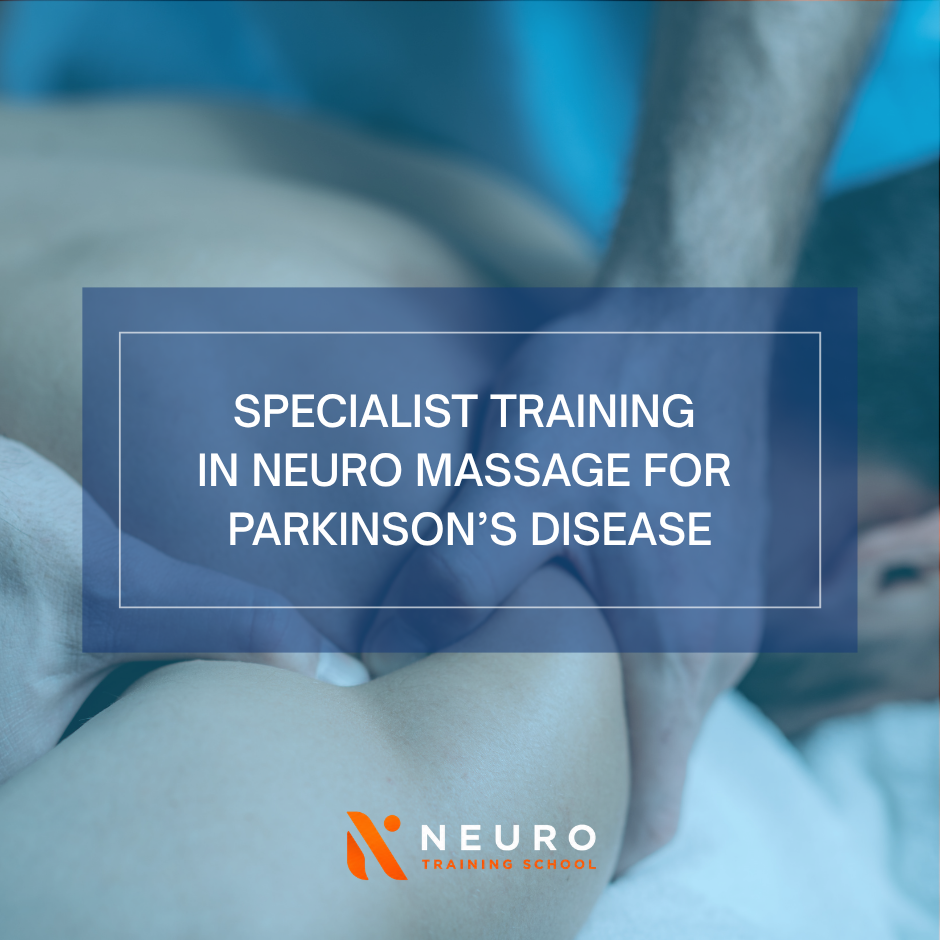
Specialist training in neuro massage for Parkinson’s disease
Covers the neuroscience of Parkinson’s disease, dopamine pathways, rigidity, tremor, bradykinesia, freezing episodes, non-motor symptoms, and how to time sessions around medication cycles for optimal outcomes.
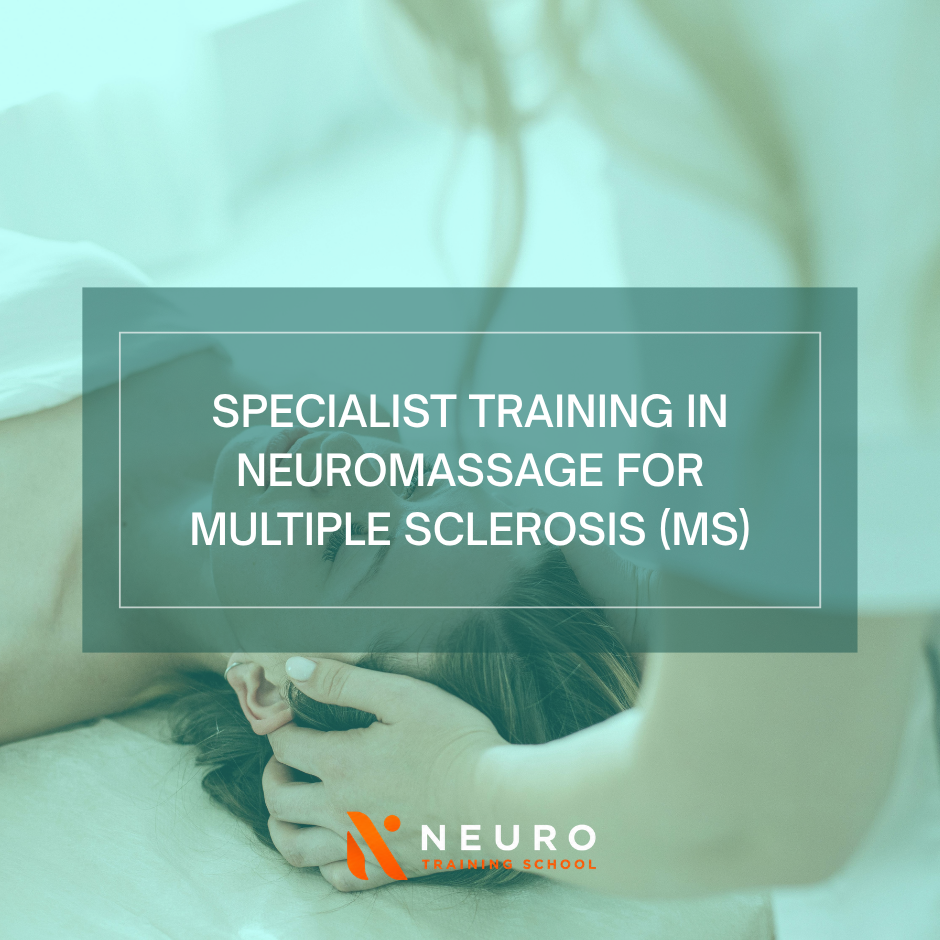
Specialist Training in NeuroMassage for Multiple Sclerosis (CPD)
Courses focus on fatigue, altered sensation, positioning, communication, spasticity, inclusive practice, and person-centred support within real-world settings. Plus, how to adapt techniques safely across fluctuating symptoms.
Specialist Training in NeuroMassage for Brain Injuries (CPD)
Specialist Training in NeuroMassage for Post-Stroke Clients (CPD)
Specialist Training in NeuroMassage for Motor Neurone Disease (CPD)
Specialist Training in NeuroMassage for Cerebral Palsy (CPD)
Specialist Training in NeuroMassage for Spinal Cord Injuries (CPD)
Specialist Training in NeuroMassage for Transverse Myelitis
Covers the insight, skill, and clinical reasoning needed to work safely, compassionately, and effectively with clients affected by neurological conditions, complex disabilities, and long-term rehabilitation needs.
Safeguarding Vulnerable Adults for Health and Wellness Professionals
Specialist Training in NeuroMassage for Alzheimer’s & Dementia Care
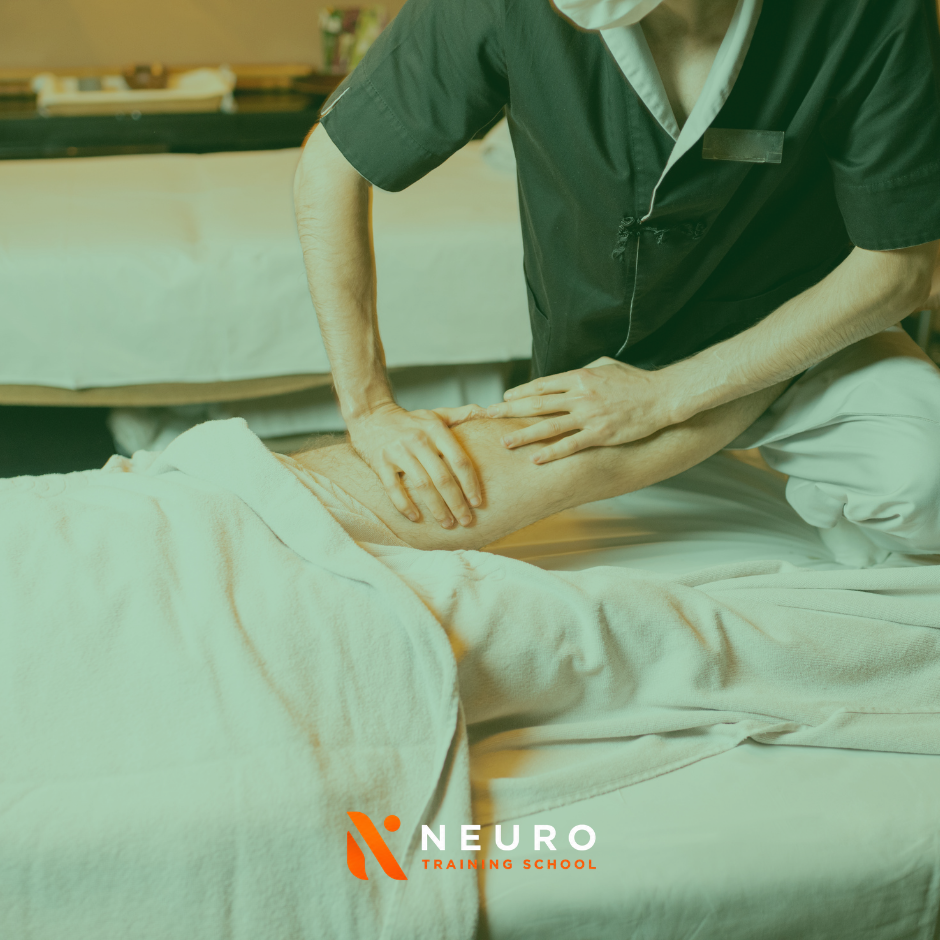
Specialist Training in NeuroMassage for Hospice & Palliative Care

What Training Path Is Right for You?
Not sure which course is right for you? Take the 60-second course-finder quiz
As someone who’s worked as a support worker , carer, rehab assistant, and now a massage therapist, I found this safeguarding course incredibly valuable.
I’m currently expanding my practice and took the course to ensure I’m creating the safest possible environment for clients. It really highlighted key areas I hadn’t fully considered before.
Whether you’re in health, wellness, or care work—this course is a must. Practical, clear, and so worth it.
Mirela Dumitrescu
Qualified Massage Therapist
Questions We Get Asked a Lot
Yes. The NeuroMassage Professional Training pathway is designed for qualified massage therapists and bodyworkers.
These courses are specialist continuing professional development (CPD) programs focused on neurological conditions, complex care, communication, adaptation-based practice, and inclusive client support.
The training does not teach entry-level massage skills or beginner massage techniques. Participants are expected to already hold a recognised massage qualification and continue working within their existing professional scope of practice.
If you are not yet qualified as a massage therapist, the NeuroWellness training pathway may be more appropriate for your current stage.
Yes. Neuro Training School professional courses are recognised by major UK insurance providers including Towergate and Westminster, and by Massage & Myotherapy Australia (MMA) for eligible Australian therapists.
Some insurance providers, including Balens, may also provide cover depending on your individual policy terms.
Our courses are CPD-accredited and designed to support qualified massage therapists working within their existing professional scope of practice.
As insurance requirements vary between providers and countries, we always recommend confirming cover directly with your insurer before working with new client groups or complex presentations.
CPD hours are confirmed at accreditation and are specified on each individual course page. All courses are accredited by the CPD Group, whose hours are recognised by the major massage and complementary therapy professional associations in the UK and Australia. If you have a specific CPD hours requirement from your association, check your individual course page or contact us and we’ll confirm the hours directly.
Yes. This is one of the most common questions we receive, and it is an important one.
NeuroMassage training is not based on memorising routines or learning a fixed set of techniques to use on every client. Neurological conditions and complex care presentations vary enormously from person to person. Two people with the same diagnosis can present completely differently in terms of movement, fatigue, sensory changes, pain, communication, cognition, positioning needs, emotional wellbeing, medical complexity, and daily function.
Because of this, the most important skill is not memorising a sequence of hands-on techniques. It is learning how to think clinically, adapt appropriately, communicate safely, and make informed decisions based on the individual in front of you.
Your hands are already your tools. What this training develops is the understanding behind them.
The courses focus on neurological presentations, safety considerations, communication differences, fatigue management, positioning, sensory awareness, consent, professional boundaries, and adaptation-based practice. These are the areas that help therapists work more confidently and appropriately with complex presentations in real-world settings.
Hands-on experience still matters. Nothing replaces professional practice and clinical experience over time. But specialist neurological work is not about performing one exact technique correctly. It is about understanding how to adapt safely and appropriately for different people, different conditions, and different stages of care.
That clinical reasoning, condition-specific understanding, and adaptation-based thinking can absolutely be taught online in a structured, evidence-informed way.
The goal of the training is not to replace your existing massage qualification. It is to expand your confidence, understanding, and decision-making when working with neurological and complex care clients.
Courses are completed online and designed to fit around your existing schedule. Because the training is self-paced, completion time varies depending on the course and how deeply you choose to engage with the material.
Some shorter certificate courses may take a few hours to complete, while more advanced specialist training pathways can involve 30+ hours of learning, including video modules, reading materials, reflection exercises, and downloadable resources.
Neuro Training School was built to raise standards in neurological and complex care education. These are not designed as quick “tick-box” courses. The content is intentionally detailed, practical, and clinically relevant so therapists can build genuine confidence and understanding when working with complex presentations.
You can move through the training at your own pace and revisit modules whenever needed as your experience grows and new clinical questions emerge.
No training course can guarantee referrals. Building professional relationships still depends on your communication, experience, professionalism, and local networking.
However, specialist neurological training can help position you more confidently within rehabilitation and complex-care settings. Many healthcare professionals, case managers, and support teams want to know if a therapist has completed relevant education before referring clients with neurological conditions or complex needs.
Our courses are designed to help therapists build stronger clinical understanding, safer decision-making, and more confidence working alongside wider care teams. Many students also find the training helps them communicate more professionally with rehabilitation providers, write clearer case notes, and explain their work more confidently within multidisciplinary environments.
Over time, this can help strengthen trust, credibility, and referral opportunities within neurological and complex-care spaces.
Absolutely. Many therapists begin working with neurological clients long before they receive specialist training, especially in community, wellness, disability, aged-care, or rehabilitation settings. What these courses often provide is the deeper understanding behind why certain adaptations, communication approaches, positioning choices, and clinical decisions matter.
Neurological presentations are highly individual. Two clients with the same diagnosis may present completely differently depending on fatigue, cognition, sensory changes, mobility, pain, medication, emotional wellbeing, environment, and stage of progression. Experience alone does not always provide the wider neurological framework needed to understand those differences confidently and safely.
These courses are designed to strengthen your clinical reasoning, professional confidence, communication, and decision-making within complex-care settings. The goal is not to tell experienced therapists they have been “doing it wrong.” The goal is to help therapists understand neurological presentations more deeply, work more safely within scope of practice, and feel more confident adapting their approach to the individual in front of them.
Many experienced therapists tell us the training changes how they think, communicate, assess, and adapt sessions, even after years in practice. Therapists often report feeling more confident discussing cases with families, carers, rehabilitation teams, and other healthcare professionals after completing the training.
Many therapists also choose to complete specialist training to strengthen professional confidence, support insurance recognition requirements, improve safety awareness, and demonstrate a higher standard of neurological understanding within complex-care settings.
The NeuroMassage Professional Training pathway is designed for qualified massage therapists and bodyworkers wanting to develop specialist knowledge in neurological and complex-care settings. These courses focus on clinical reasoning, neurological presentations, communication, safety considerations, professional boundaries, adaptation, and working confidently within scope of practice. They are CPD-accredited and recognised by major insurers and professional organisations.
The NeuroWellness pathway is designed for a wider audience, including carers, support workers, wellness professionals, disability staff, family members, and people wanting a more accessible introduction to neurological wellbeing and supportive care. These courses focus more on practical support, communication, comfort, safeguarding, wellbeing, and inclusive everyday care approaches.
NeuroWellness courses may also be valuable for massage therapists wanting to broaden their understanding of areas such as empathetic client care, sleep hygiene, nervous system wellbeing, accessibility, and inclusive wellness practice. Unlike the Professional Training pathway, the NeuroWellness courses do not require a massage qualification and are open to anyone with an interest in neurological wellbeing and supportive care.
While the two pathways are different, they share the same core values around dignity, accessibility, inclusion, and person-centred support.
If you are a qualified massage therapist wanting to work professionally with neurological or complex-care clients, the NeuroMassage Professional Training pathway is the appropriate route for specialist clinical development.
Yes. Neuro Training School is designed to support ongoing professional growth, not just course completion.
Students are invited to join our private NeuroMassage Therapist Facebook community, where therapists can continue learning, ask questions, share experiences, and connect with others working in neurological and complex-care settings.
Students will also have the opportunity to register with My Rehab Journey, our neurological rehabilitation and wellness directory designed to help connect neurological-aware therapists and support professionals with people seeking specialist services and support.
Our goal is to help build a more connected, informed, and supportive neurological wellness community for both professionals and the people they support.
No. Many students join the courses with little or no previous experience working with neurological clients.
The training is designed to help therapists build confidence gradually through condition-specific understanding, adaptation-based thinking, communication awareness, and practical clinical reasoning. Whether you are completely new to neurological work or already supporting clients with complex conditions, the courses are structured to help you expand your understanding in a clear and professionally grounded way.
Many therapists enrol because they want to feel more confident, informed, and prepared when supporting clients with neurological conditions and complex care needs.
General massage training often focuses on anatomy, relaxation, sports massage, or musculoskeletal presentations. NeuroMassage training focuses more specifically on working with neurological conditions, disability, complex care presentations, communication differences, sensory considerations, fatigue, positioning, professional boundaries, and adaptation-based practice.
Neurological and complex-care clients often require a more individualised approach. Two people with the same diagnosis may present completely differently depending on their symptoms, environment, mobility, cognition, medication, fatigue levels, emotional wellbeing, and stage of progression.
The courses are designed to help therapists build a deeper understanding of those differences so they can work more confidently, safely, and inclusively within their existing scope of practice.
These courses are not designed to teach beginner massage techniques or replace an entry-level massage qualification.
Instead, the training focuses on the clinical understanding, communication, adaptation, and decision-making that support safer and more appropriate work with neurological and complex-care clients.
The courses explore topics such as positioning, fatigue, sensory changes, communication considerations, professional boundaries, consent, neurological presentations, and inclusive practice. The goal is to help therapists adapt their existing hands-on skills more confidently and appropriately for the individual in front of them.
Because neurological presentations vary significantly from person to person, the emphasis is placed on clinical reasoning and adaptation rather than memorising fixed routines or protocols.