Understanding NeuroMassage — Why Many Massage Therapists Feel Unprepared for Neurological Clients
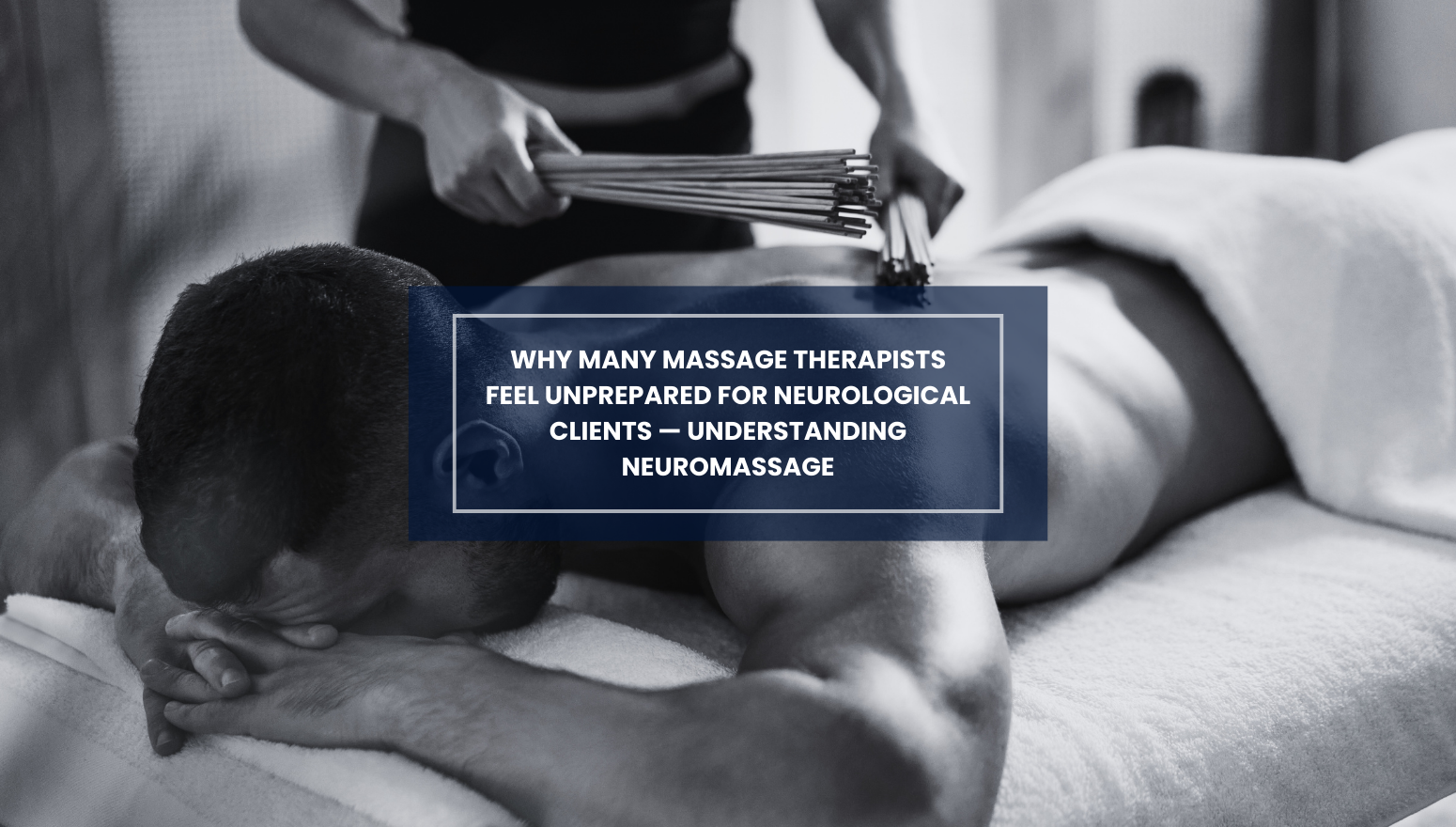
Many massage therapists enter the profession to help people feel more comfortable in their bodies. Supporting clients with complex health conditions can be especially meaningful. However, when a client with a neurological condition books an appointment, some therapists may feel unsure how to approach the session. This is one reason many professionals are beginning to explore NeuroMassage, an approach that helps therapists better understand neurological conditions in massage practice.
This uncertainty is not uncommon. In many cases, it reflects a lack of exposure or education about neurological conditions, rather than a lack of skill or willingness to help.
Massage therapy training typically focuses on musculoskeletal anatomy, soft tissue techniques, and relaxation massage. These skills form an essential foundation for practice. However, depending on the program, neurological conditions may only be introduced briefly or discussed in limited detail.
Because of this, some massage therapists may graduate with strong hands-on skills but feel less confident when working with clients who have conditions affecting the nervous system.
Massage therapists may also have questions about professional liability or insurance coverage when working with clients who have complex medical conditions. If therapists are unsure how neurological conditions fit within their training or scope of practice, they may worry about whether their insurance fully supports this type of work.
Neurological conditions can influence how the body moves, feels, and responds to touch. Clients may experience differences in muscle tone, coordination, sensation, or energy levels. These changes do not automatically prevent massage, but they may require therapists to adapt positioning, pacing, or pressure during a session.
Examples of neurological conditions massage therapists may encounter include:
Each condition can affect the body in different ways, which is why therapists often benefit from learning more about neurological awareness in massage practice.
| Area | Traditional Massage Focus | NeuroMassage Awareness |
|---|---|---|
| Primary focus | Muscles and soft tissue | Nervous system and neurological conditions |
| Client Considerations | Muscle tension or injury | Movement changes, sensation differences, muscle tone |
| Massage Techniques | Standard massage methods | Familiar techniques with thoughtful adaptations |
This idea is central to NeuroMassage.
Rather than being a single technique, neuromassage is generally described as an approach to massage that adapts treatment for clients living with neurological conditions or complex needs. The massage therapist uses their knowledge of how neurological conditions may affect the body to guide decisions during the session.
In practice, this means the massage techniques themselves may remain familiar. What changes is the therapist’s understanding of how the nervous system influences the client’s experience.
For example:
Without this knowledge, some therapists may worry about making the wrong decision during treatment. They may be unsure how muscle stiffness, sensory differences, or fatigue could influence a massage session.
There can also be practical concerns about professional scope and insurance coverage. Massage therapists typically aim to provide sessions focused on comfort, relaxation, and wellbeing, rather than attempting to treat medical conditions. Understanding neurological conditions can help therapists remain within their professional role while still supporting clients appropriately.
Because of these uncertainties, some therapists may hesitate to work with neurological clients. This hesitation often comes from caution rather than a lack of interest.
Many people living with neurological conditions seek massage for the same reasons as other clients — comfort, relaxation, and a sense of wellbeing.
As the massage profession continues to evolve, more therapists are exploring additional education that focuses on working with neurological conditions. Some training programs provide guidance on adapting massage for conditions such as Parkinson’s disease, stroke, or multiple sclerosis while maintaining safe practice boundaries.
Learning more about the nervous system can help massage therapists approach neurological clients with greater awareness, confidence, and sensitivity to individual needs.
For many practitioners, developing this understanding is not about learning completely new techniques. Instead, it involves applying existing massage skills with a deeper appreciation of how neurological conditions may influence the body.
When therapists gain this perspective, working with neurological clients often becomes less intimidating and more rewarding. Understanding how neurological conditions may influence the body allows therapists to apply their existing skills with greater confidence and sensitivity. With the right awareness, massage therapists can support a wider range of clients safely while continuing to focus on comfort, relaxation, and wellbeing.
If you want to learn more about NeuroMassage and working confidently with neurological clients, subscribe to our newsletter. Get practical tips, insights, and updates designed for massage therapists looking to deepen their skills.