Working With Clients After Stroke: What Massage Therapists Should Understand
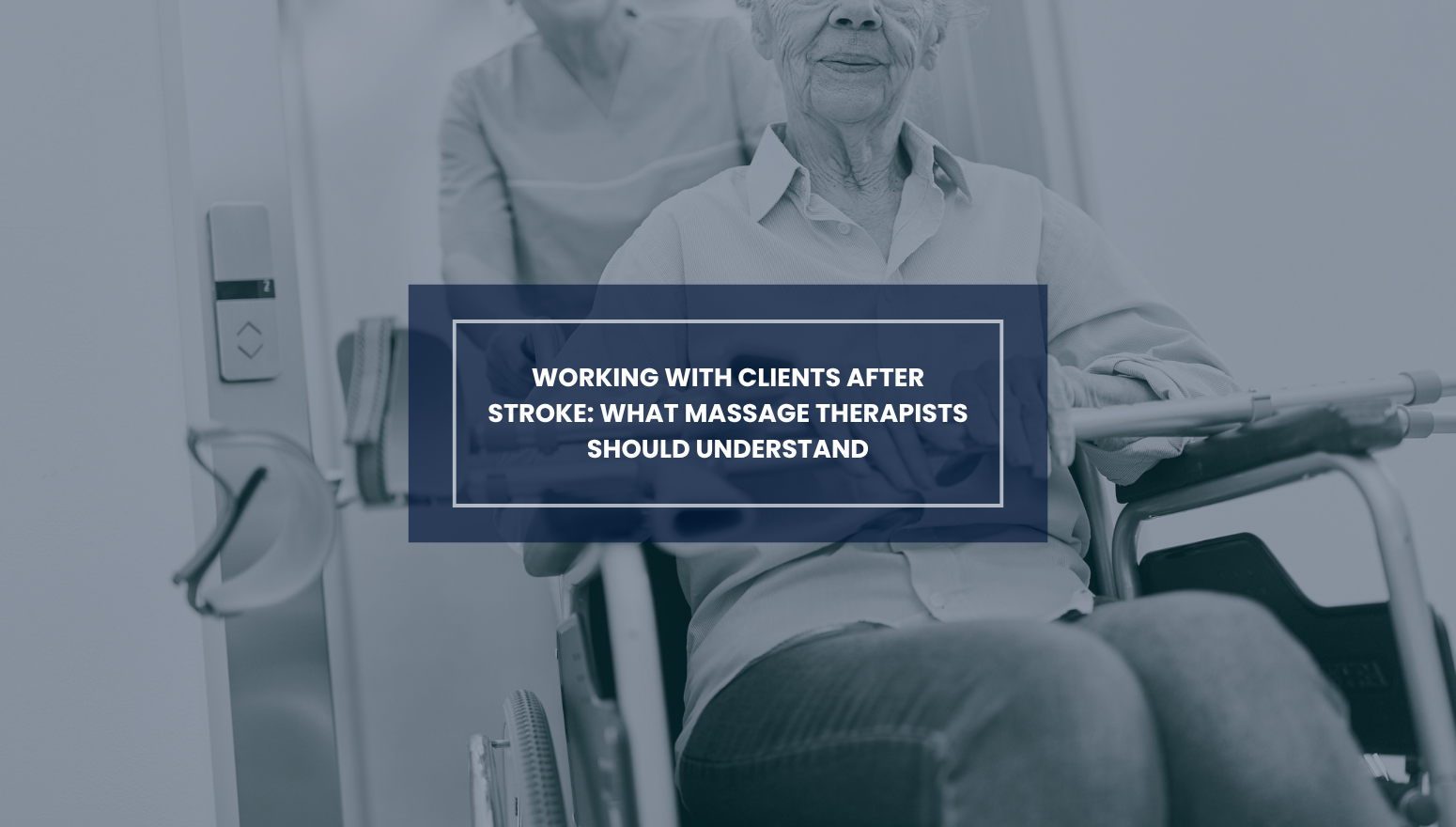
Understanding how stroke affects movement, sensation, and recovery in massage therapy practice
Stroke can affect the body in several ways, and these changes may influence how clients move, feel, and respond during a session. For massage therapists, having a basic understanding of these effects can help create a more supportive and aware environment when working with clients who have experienced a stroke.
One of the main ways stroke can affect the body is through changes in movement. Because stroke affects areas of the brain involved in movement and coordination, communication between the brain and body may be disrupted. As a result, some people experience reduced muscle strength, difficulty with coordination, or challenges with balance. Movements that were once automatic may require more concentration and effort. This means everyday actions such as standing up, walking, or lifting an arm may feel slower and less controlled than before.
Many stroke survivors also experience weakness or paralysis on one side of the body. This happens because the brain typically controls movement on the opposite side of the body. If the stroke affects the left side of the brain, the right side of the body may become weaker, and vice versa. This can influence how a person walks, sits, or uses their arms and hands in daily activities. In practical terms, a client may lean to one side, avoid using one arm, or depend more heavily on their stronger side for support.
Muscle tone may also change after a stroke. Some individuals develop increased muscle tone, stiffness, or spasticity, while others may experience reduced muscle activation or weakness. These changes can influence how muscles move and feel, and they may affect posture and general movement patterns. For example, one limb may feel tight and resistant to movement, while another may feel heavy or difficult to activate.
Sensory awareness can also be affected. Some clients may have reduced sensation in certain areas of the body, meaning they may not feel touch as clearly as before. Others may experience altered awareness of specific body regions, which can affect how they perceive physical contact or body position. This can lead to responses that seem inconsistent or different from what might be expected in someone without neurological changes.
Recovery after stroke takes time and varies greatly from person to person. Some individuals regain significant function, while others continue to live with long-term physical changes. The recovery process depends on many factors, including the location and severity of the stroke and the rehabilitation support available. Because of this, recovery varies significantly between individuals, and progress is often gradual rather than linear.
Understanding these possible changes helps massage therapists approach sessions with greater awareness and sensitivity. Clients recovering from stroke may move more slowly, experience fatigue during sessions, or have areas of altered sensation that require clear communication and patience. It also encourages therapists to observe small changes in comfort, movement, or energy throughout treatment rather than assuming consistency.
NeuroMassage education focuses on helping therapists understand how neurological conditions affect the body. The goal is not to teach massage methods, but to build a clearer understanding of how conditions such as stroke influence movement, sensation, and energy levels. This awareness supports safer, more adaptable, and more responsive care for clients with neurological conditions.
If you want to stay informed about best practices in safeguarding, learn more about NeuroMassage, and gain practical tips for working confidently with diverse clients, subscribing to our newsletter is a helpful next step. You’ll receive expert insights, up-to-date guidance, and practical strategies designed to support massage therapists in strengthening their skills, maintaining safe practice, and delivering high-quality client care.